Greek Floral Border Meander: A Designer’s Review
As an embroidery designer who has spent countless hours digitizing, stitching, and critiquing machine embroidery design files, I have developed a keen eye for what works in the real world. It is not enough for a design to look pretty on a screen; it must hold up under the needle, survive the wash cycle, and appeal to the end customer. Recently, I evaluated the Greek Floral Border Meander, a piece that sits squarely in the Borders category, to determine its viability for commercial and personal projects. This review is written from the perspective of a practitioner looking at practical application, stitch quality, and market potential.
First Impressions: Balancing Geometry and Nature
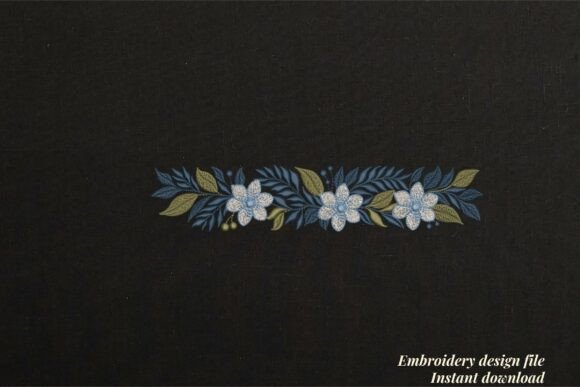
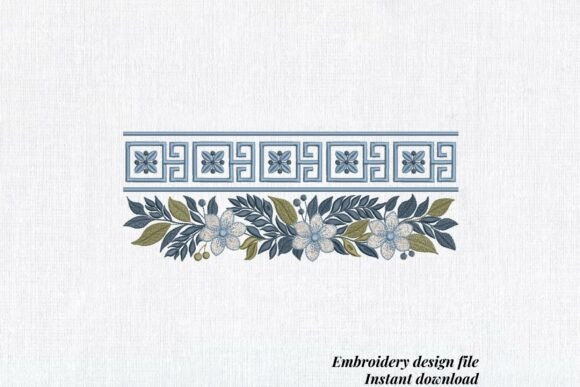
The first thing that strikes you about the Greek Floral Border Meander is its sophisticated duality. It marries the rigid, architectural precision of a classic Greek meander line with the organic, soft curves of a botanical floral border. In design theory, this contrast is difficult to pull off without one element overpowering the other. However, this composition achieves a refined balance. The meander provides a strong structural backbone, while the soft blue floral elements introduce a sense of calm and elegance.
Visually, the mood is timeless yet fresh. It does not feel overly traditional or stuffy, nor does it feel too modern to lack character. For an embroidery project, this versatility is gold. It suggests a level of professionalism that can elevate a simple item into a boutique-quality piece. When I first loaded the embroidery file into my viewer, I looked closely at the transition points between the geometric lines and the floral motifs. The flow felt natural, suggesting that the digitizer paid attention to how the thread would lay down, rather than just tracing shapes.
Real-World Application: From Mockup to Finished Product
To truly test a design, you must imagine it on actual goods. I visualized the Greek Floral Border Meander on several common items to assess its fit. My primary test case was a custom linen tote bag. Linen has a distinct weave, and borders often struggle if the stitch density is too high, causing puckering. Given the balanced ornamental composition described, this design seems ideal for a table runner or a wide hem on a tote. The linear nature of the meander allows it to run cleanly along edges, framing the fabric without overwhelming it.
Beyond home decor, I considered custom apparel. Imagine this border stitched along the bottom hem of a high-quality cotton sweatshirt or the cuff of a long-sleeve tee. The soft blue floral aspect pairs beautifully with neutral tones like cream, oatmeal, or slate gray. For an Etsy seller or small shop owner, this design offers a unique selling point. It is not a generic flower cluster; it is a structured border that implies intentionality and design skill. This can significantly increase the perceived value of a handmade product, allowing creators to charge a premium for what appears to be a complex, custom-designed item.
I also see strong potential in the gift market. A personalized gift such as a baby blanket or a nursery pillow cover benefits from the gentle aesthetic of the floral elements. The Greek meander adds a touch of classical stability, which appeals to parents looking for timeless decor rather than fleeting trends. Whether used for holiday embroidery gifts or year-round boutique merchandise, the design’s adaptability is its strongest asset.
Technical Considerations and Stitching Performance
While the aesthetic is promising, the technical execution is where many designs fail. As a reviewer, I always advise checking the stitch density before committing to a final fabric. Border designs can sometimes be dense, especially where the floral elements overlap the meander lines. If you are working with a lightweight or stretchy fabric, such as a thin jersey for a t-shirt or a delicate silk for a scarf, you must use an appropriate stabilizer. A cut-away stabilizer might be necessary for garments that will undergo frequent washing, while a tear-away could suffice for stable home decor items like pillow covers.
The description mentions a "soft blue" floral element. In embroidery, thread color choice is critical. On dark fabrics, this design might require careful planning to ensure the blue pops without looking washed out. I recommend testing the design on scrap fabric in both light and dark shades. Additionally, check if the design utilizes satin stitch for the meander lines and fill stitch for the flowers, or if it relies on running stitch details. Satin stitches offer a luxurious sheen but can snag if too long; fill stitches provide texture but add bulk. Understanding the stitch types helps you predict how the finished product will feel to the touch.
One area requiring caution is curved surfaces. Applying a linear border like the Greek Floral Border Meander to a cap or a curved sleeve seam requires expertise. The rigid meander line may distort if the hoop tension is not perfect or if the fabric is stretched unevenly. For beginners, I suggest sticking to flat surfaces like aprons, tea towels, or tote bags until you master hooping techniques for curved items.
Commercial Viability for Craft Entrepreneurs
For craft business owners and digital product sellers, the licensing and versatility of a design are paramount. Before selling items made with this digital embroidery file, confirm the license terms. Assuming commercial use is permitted, this design fits well into a cohesive brand aesthetic. It works beautifully for commercial embroidery projects where consistency is key. You can use the same border across a product line—table runners, napkins, and placemats—to create a recognizable collection.
Moreover, the design lends itself well to printable mockup creation. Because the composition is balanced and ornamental, it photographs well. High-quality images of the stitched border on textured fabrics can drive engagement on social media and Etsy listings. Customers are drawn to the clarity of the lines and the elegance of the floral details. This visual appeal builds trust, showing that your small shop product is crafted with attention to detail.
Practical Designer Notes for Best Results
To get the most out of the Greek Floral Border Meander, follow these practical steps:
- Test on Scrap Fabric: Always stitch a sample on the same type of fabric you plan to use for the final product. Check for puckering or thread breaks.
- Check Thread Contrast: Ensure the soft blue floral threads contrast sufficiently with the background fabric. If using white thread on white fabric, the detail may get lost.
- Verify Hoop Size: Confirm that your machine’s hoop size accommodates the full length of the border. You may need to reposition the hoop for longer runs.
- Inspect Small Details: Zoom in on the digital file to check for tiny, isolated stitches that might cause bird’s nests or thread jams.
- Use Proper Stabilizer: Match the stabilizer to the fabric weight. Heavy fabrics may need less support, while light knits require robust stabilization.
- Review Licensing: Double-check the license agreement to ensure you are compliant when selling finished items or using the design in client work.
In conclusion, the Greek Floral Border Meander is a thoughtful addition to any designer’s library. It bridges the gap between classical structure and natural beauty, offering a versatile tool for a wide range of embroidery applications. By understanding its technical requirements and leveraging its aesthetic strengths, you can create stunning, professional-quality items that resonate with customers and stand the test of time.